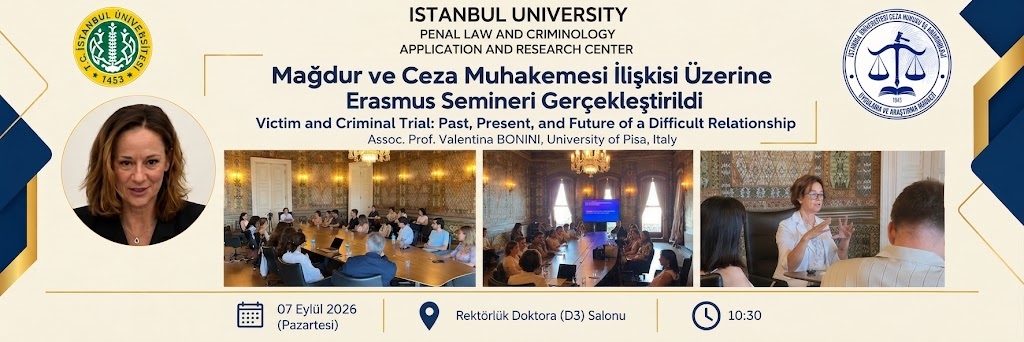
Mağdur ve Ceza Muhakemesi İlişkisi Üzerine Erasmus Semineri Gerçekleştirildi
İtalya’daki Pisa Üniversitesi öğretim üyesi Doç. Dr. Valentina BONINI, Erasmus Ders Verme Hareketliliği kapsamında Merkezimizin konuğu olarak 7 Eylül 2026 tarihinde “Mağdur ve Ceza Muhakemesi: Zor Bir İlişkinin Geçmişi, Bugünü ve Geleceği (Victim and Criminal Trial: Past, Present, and Future of a Difficult Relationship)” başlıklı bir seminer verdi.
Seminerde, mağdurun ceza adaleti sistemi içerisindeki konumu tarihsel gelişimi çerçevesinde ele alındı. Modern kamusal ceza adaletinin gelişmesiyle suçtan kaynaklanan çatışmanın devlet tarafından devralındığını belirten BONINI, bu dönüşümü “çatışmanın kamulaştırılması (expropriation of conflict)” kavramı üzerinden değerlendirdi. Modern ceza muhakemesinin sanığın haklarının güvence altına alınması bakımından vazgeçilmez kazanımlar sağladığını, ancak kusur, sorumluluk ve cezalandırma ekseninde şekillenen bu yapının mağduru zaman içerisinde muhakemenin merkezinden uzaklaştırdığını ifade etti.
Sunumda ayrıca mağdurun ceza muhakemesine şahsi hak davacısı (civil party), suçtan zarar gören (injured person) ve tanık (witness) olarak katılmasının doğurduğu farklı usulî sonuçlar karşılaştırmalı olarak incelendi. Özellikle mağdurun yalnızca bir delil kaynağı olarak görülmesinin ve sorgulama sürecinin ikincil mağduriyete (secondary victimisation) yol açabilme riski üzerinde duruldu.
Seminerin devamında, Avrupa hukukunda mağdur haklarının gelişimi ve özellikle 2012/29/EU sayılı Avrupa Birliği Mağdur Hakları Direktifi ele alındı. Mağdurun bilgilendirilme, muhakemeye katılma, korunma ve destek hizmetlerinden yararlanma hakları değerlendirilirken, mağdurun korunması ile sanığın temel hakları arasında gözetilmesi gereken dengeye de dikkat çekildi. Mağdurun yalnızca korunmaya muhtaç pasif bir kişi olarak görülmesinin hukuki paternalizm tehlikesini beraberinde getirebileceği vurgulandı.
Sunumun son bölümünde ise mağdurun yalnızca belirli bir usuli statünün taşıyıcısı değil, farklı ihtiyaçlara sahip bir kişi olarak ele alındığı daha insan merkezli (human-centred) bir ceza adaleti anlayışı değerlendirildi. Bu bağlamda, mağdurun sesine ve özerkliğine daha fazla alan tanıyan onarıcı adalet (restorative justice) yaklaşımının sunduğu imkânlar üzerinde duruldu.
İngilizce olarak gerçekleştirilen seminere akademisyenler, hukukçular, öğrenciler ve konuya ilgi duyan katılımcılar iştirak etti. Program, sunumun ardından gerçekleştirilen soru-cevap ve tartışma bölümüyle sona erdi.
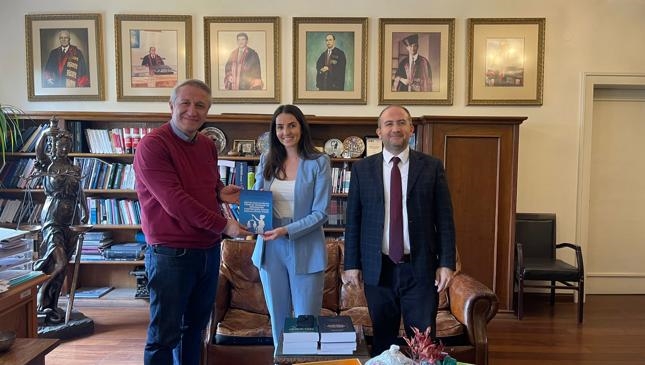
Merkezimize gerçekleştirdiği ziyaret ve değerli akademik katkıları dolayısıyla Doç. Dr. Valentina BONINI’ye teşekkür eder, Pisa Üniversitesi ile akademik iş birliğimizin devamını dileriz.
<< Seminer Videosu >>
Erasmus Seminar on the Relationship Between the Victim and the Criminal Trial
On 7 September 2026, Assoc. Prof. Valentina BONINI, a faculty member at the University of Pisa, Italy, visited our Center under the Erasmus Staff Mobility for Teaching Programme and delivered a seminar entitled “Victim and Criminal Trial: Past, Present, and Future of a Difficult Relationship.”
The seminar examined the position of victims within the criminal justice system from a historical perspective. BONINI discussed how the emergence of modern public criminal justice transferred the conflict arising from crime to the state, a development examined through the concept of the “expropriation of conflict.” While emphasising the fundamental importance of modern criminal procedure in safeguarding the rights of the accused, she also addressed how a system centred on blame, responsibility and punishment has gradually marginalised the victim within criminal proceedings.
The presentation also comparatively examined the different procedural positions of victims as a civil party, injured person, and witness. Particular attention was paid to the risk of secondary victimisation where victims are treated primarily as sources of evidence, especially in the context of testimony and questioning.
The seminar further addressed the development of victims’ rights in European law, particularly Directive 2012/29/EU on victims’ rights. The rights of victims to information, participation, protection and support were discussed together with the need to balance victim protection with the fundamental rights of the accused. BONINI also highlighted the risk of legal paternalism where victims are regarded exclusively as vulnerable persons in need of protection.
The final part of the presentation focused on a more human-centred approach to criminal justice, which regards victims not merely in terms of their procedural status but as persons with diverse needs. In this context, the potential of restorative justice to provide greater space for victims’ voices and autonomy was also discussed.
The seminar, conducted in English, was attended by academics, legal professionals, students, and others interested in the subject. It concluded with a question-and-answer and discussion session.
We would like to express our sincere appreciation to Assoc. Prof. Valentina BONINI for her valuable academic contribution and kind visit to our Center, and we look forward to continuing our academic cooperation with the University of Pisa.
<< Seminar Video >>
Fotoğraf Galerisi